Every time your line fires up, grease-laden vapor rises off the grills, fryers and ranges and heads into the exhaust system. Some of it lands on the hood and filters you can see. A lot of it travels farther, into the plenum, the ductwork and the fan on the roof. That is why kitchen exhaust cleaning is more than wiping down the hood, and why two quotes for “hood cleaning” can describe very different amounts of work.
This guide walks Detroit-area restaurant owners and managers through each part of the system that should be cleaned, what your records should show afterward, and how to tell when a job was cut short. With holiday volume pushing kitchens harder through December, it is a good time to make sure the whole system is covered.
Why the Whole System Matters, Not Just the Hood
Grease does not stop at the filters. Vapors travel past the hood and filters into the ductwork and fan, where they cool and stick to the surfaces. Over time, that buildup restricts airflow, makes the fan work harder and adds fuel inside the system. Grease in a hidden duct is just as much a problem as grease on the hood, and often a bigger one because nobody sees it.
The national fire code for commercial cooking ventilation, NFPA 96, treats the hood, grease removal devices, fans, ducts and related parts as one system that needs regular inspection and cleaning. Fire inspectors commonly refer to it when they review a commercial kitchen.
What Kitchen Exhaust Cleaning Covers, Step by Step
A complete service follows the path the grease takes, from the cooking line up to the roof. Here is what each stage involves.
Hood and filters
The hood canopy is the part everyone sees. A thorough kitchen exhaust hood cleaning removes buildup from all of its surfaces. The filters or baffles get pulled out, soaked and scrubbed, because a clogged filter lets more grease pass through to the ducts. On our jobs, the filters and baffles come out and are soaked and scrubbed, not just sprayed in place.
Plenum
The plenum is the space behind the filters where vapors collect before entering the duct. It is easy to skip because it is out of sight once the filters go back in. Ask whether the plenum is part of the quote, because heavy buildup here is a common sign of a rushed job.
Ductwork and access panels
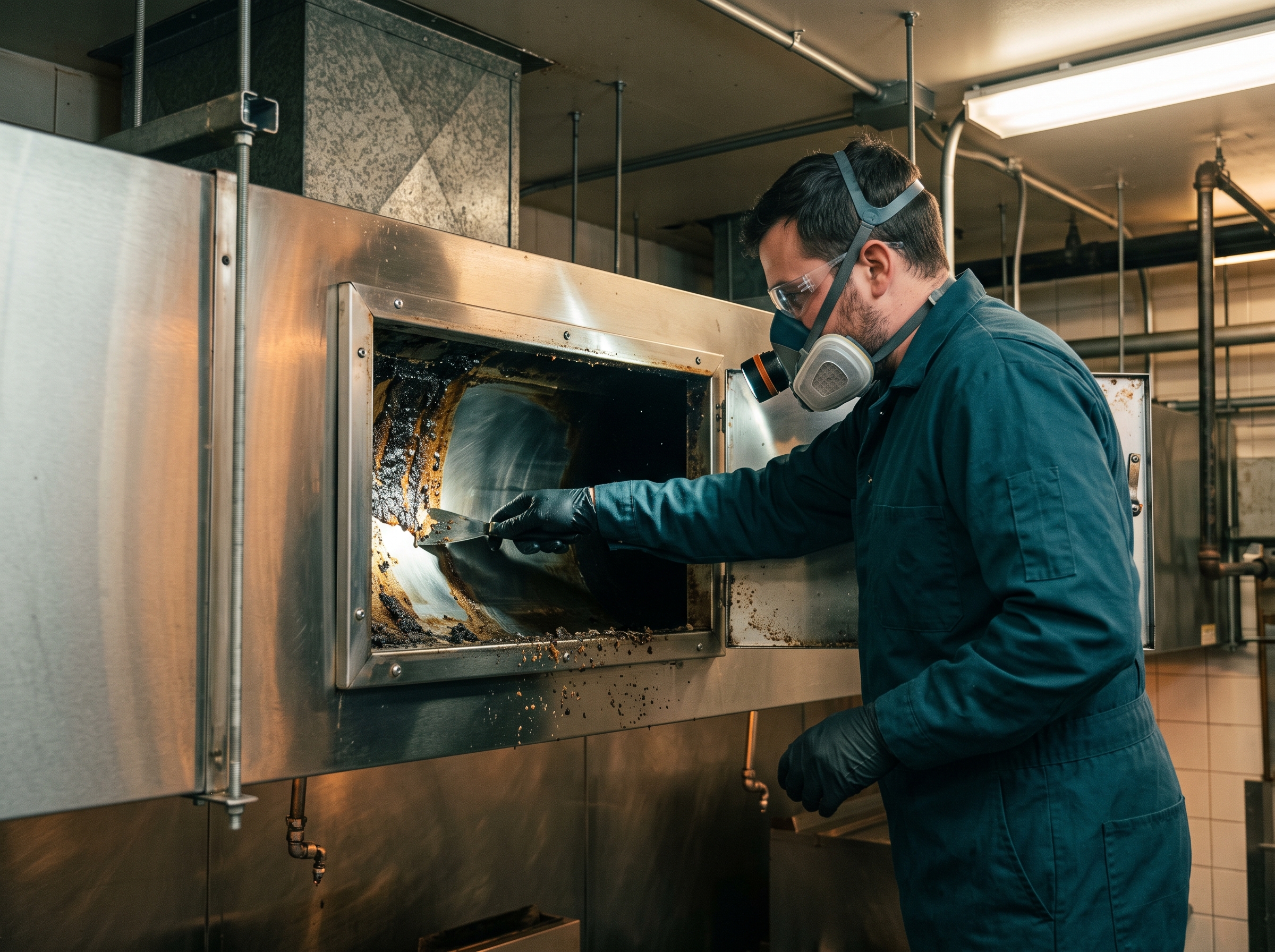
The duct carries exhaust from the hood to the fan, often through ceilings and up to the roof. Cleaning it means reaching inside through access points along its run and removing the grease that has built up on the walls. How much of the duct can be reached depends on the layout, the number of access points and the condition of the system. Commercial duct cleaning should focus on the accessible duct, and a good provider will tell you plainly if any section could not be reached.
Exhaust fan
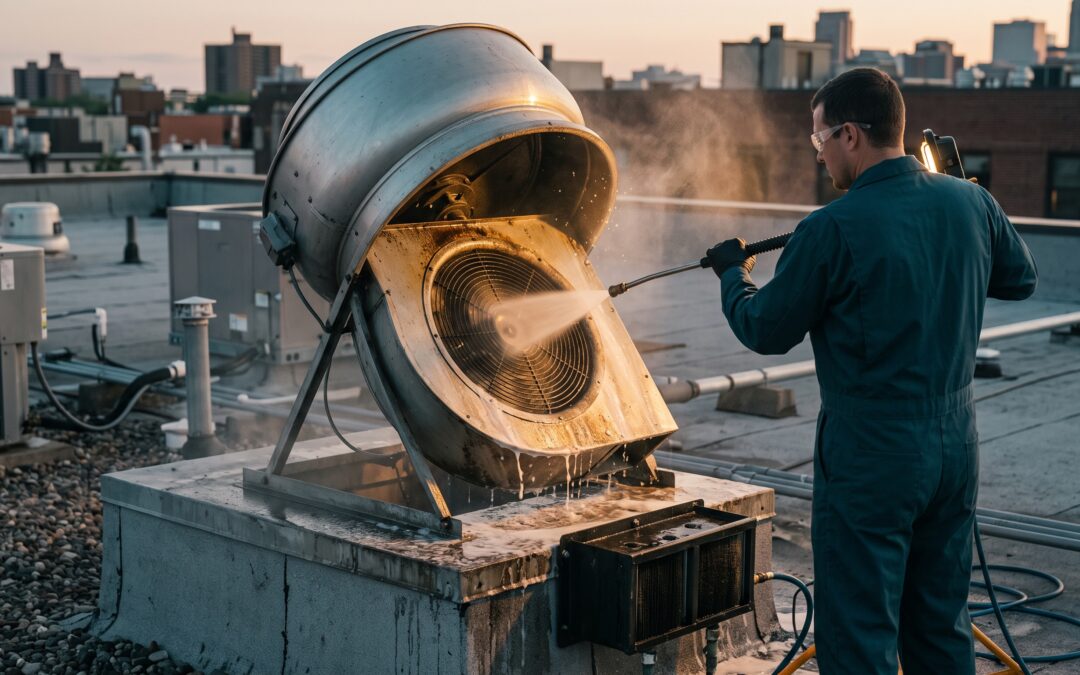
The fan, usually on the roof, pulls the exhaust out of the building. Grease that reaches it coats the blades and housing, which can throw the fan off balance and drip onto the roof. A full-system cleaning includes the accessible fan blades and housing, so the job truly runs from the hood to the fan.
Every kitchen is laid out a little differently. Some have long horizontal duct runs above a dining room, more than one hood on the same system, or a fan that is hard to get to on a crowded roof. Walk the system with your provider before the first cleaning so everyone agrees on what is included. If an area is hard to reach today, ask what it would take to make it accessible next time, because a section that never gets cleaned keeps collecting grease year after year.
What Your Service Records Should Show
After the crew leaves, you should have proof of what was done. Look for documentation that includes:
- The date and the company that did the work: so you can show an inspector when the system was last serviced.
- The parts of the system that were cleaned: hood, filters, plenum, ductwork and fan.
- Any areas that could not be reached: with a note on why, so you can plan access for next time.
- Photos of the work: before and after pictures make it easy to see the difference.
Under NFPA 96, a record of the cleaning is generally kept on the premises, and areas that were not cleaned should be noted. We provide clear documentation and photos of the work with each job, which supports your compliance records. If you want to know how inspectors use these records, see our post on how health inspectors review cleaning records.
How to Spot an Incomplete Job
A few quick checks after service can tell you whether the whole system got attention:
- Look behind the filters: if the plenum still has heavy grease, the job likely stopped at the hood.
- Ask about the fan: if nobody went on the roof, the fan was probably skipped.
- Compare the report with the quote: every component you paid for should appear in the documentation.
- Check the photos: you should see the duct and fan, not just the canopy.
If a price seems far lower than the rest, ask which parts it leaves out. Commercial hood cleaning that covers only the canopy and filters will cost less, but it leaves the hidden grease in place.
Frequently Asked Questions
What is the best way to clean a kitchen exhaust system?
Clean it as one system, from the hood to the fan. That means removing and degreasing the filters, cleaning the hood and plenum, reaching the accessible ductwork, and cleaning the fan blades and housing, then documenting what was done.
How often should a restaurant exhaust system be cleaned?
It depends on how much and what you cook. The inspection schedule commonly cited from NFPA 96 runs from monthly for solid fuel cooking, to quarterly for high-volume operations such as 24-hour, charbroiling or wok cooking, to semiannually for moderate volume and annually for low volume (Massachusetts fire services summary of the NFPA 96 schedule). Your local fire marshal has the final word.
Does hood cleaning include the ductwork and fan?
Not always. Some providers clean only the hood and filters. Hood and exhaust work can also be quoted separately from general kitchen cleaning, so confirm the scope in writing before service.
Can exhaust cleaning be done after hours?
Yes. We schedule exhaust and duct cleaning outside restaurant hours, including late nights, early mornings and slower days, so your kitchen keeps running.
Schedule a Full System Cleaning
The best kitchen exhaust cleaning is the one that follows the grease all the way to the roof and leaves you with records to prove it. D Poole Commercial Kitchen Cleaning has served Michigan kitchens since 1979, and we work around your schedule with after-hours and weekend appointments across Metro Detroit, Ann Arbor, Brighton, Flint, Lapeer and beyond.
Learn more about our hood-to-fan exhaust system service and our restaurant hood and filter service, or call or text (810) 287-2468 for a free estimate before the holiday rush.