Between Thanksgiving catering, office parties and New Year’s Eve, late November through December is when Detroit kitchens push the most food through the line. It is also when grease traps fill up fastest. Many owners book grease trap pumping and assume the job is done, but pumping and a full cleaning are not the same service. Knowing the difference helps you ask for the right work, compare quotes fairly and avoid a backup on your busiest night.
This guide explains what pumping does, what a complete cleaning adds, how often to schedule service and what records to keep. It is written for restaurant owners and kitchen managers across Metro Detroit and the rest of Michigan.
What Grease Trap Pumping Actually Does
A grease trap slows down wastewater from your sinks and dishwashers so fats, oils and grease (often called FOG) can float to the top while food solids sink to the bottom. Cleaner water in the middle flows out to the sewer. Over time, the grease layer gets thicker and the solids layer builds up, leaving less room for the trap to do its job.
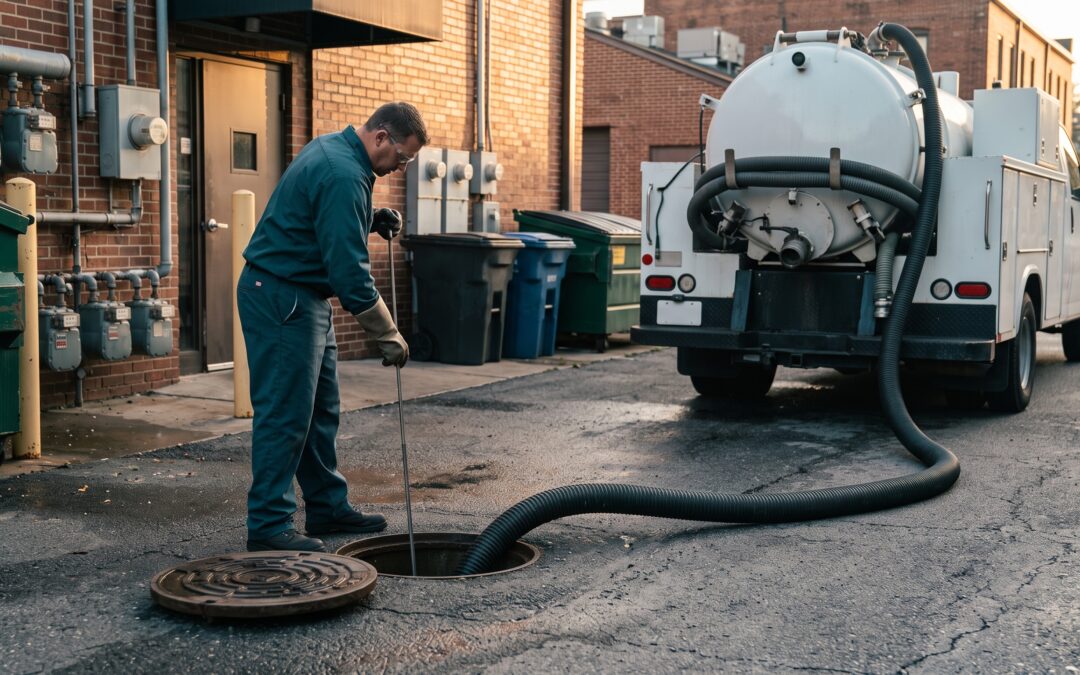
Pumping means vacuuming out the contents: the floating grease, the water and some of the settled material. It lowers the level in the trap and buys you time. On its own, though, pumping can leave hardened grease stuck to the walls and baffles, compacted solids in the corners and partial clogs in the inlet or outlet. Those leftovers shrink the trap’s working space, so it fills faster the next time.
What a Full Grease Trap Cleaning Adds
A complete service goes past emptying the tank. At D Poole, our commercial grease trap service includes:
- Complete grease removal: clearing the top layer of fats, oils and grease.
- Solids and liquids removed: vacuuming out the liquid and the settled solids, not just skimming the surface.
- Baffles and sides scraped clean: removing the hardened buildup that pumping alone tends to leave behind.
- Blockages found and cleared: checking for and clearing clogs so wastewater can move through the trap.
- A detailed report after every cleaning: a record of the work for your files and for inspectors.
When you request quotes, ask each company to spell out which of these steps are included. A low price for pumping only and a fair price for a full cleaning are not the same service, even if both invoices say “grease trap.” A good grease trap cleaning service will explain exactly what it does on every visit.
Why the Holiday Rush Fills Traps Faster
Holiday menus lean on roasts, fried sides, gravies and butter-heavy desserts, and catering orders add extra prep and extra dishwashing. More volume means more FOG headed down the drain, so a trap that handles a normal month comfortably can reach its limit in a few busy weeks.
Michigan winters add another layer. Grease cools and hardens faster in cold weather, which can make buildup in lines and traps harder to move. If your trap was due in early December, consider moving the appointment up so it is clean before the rush starts, rather than in the middle of it. A backup during a sold-out holiday party is the most expensive way to find out a trap was overdue.
How Often Should a Grease Trap Be Pumped or Cleaned?
There is no single answer for every kitchen, because the right schedule depends on your trap size and how much FOG you produce. We set up regular cleanings every one to three months, depending on how much FOG your kitchen produces. A fryer-heavy menu or a high-volume restaurant usually sits at the shorter end of that range.
Many operators also use a common industry rule of thumb: plan service before grease and solids take up about a quarter of the trap’s depth. Your local sewer authority or city may set its own requirements, so check the rules that apply to your address. The Great Lakes Water Authority, which serves much of Southeast Michigan, advises businesses to have an approved removal company regularly maintain their grease interceptor and to keep records of when it is cleaned (Great Lakes Water Authority FOG guidance for businesses).
If you are not sure whether your schedule is working, watch for warning signs between visits: slow drains, odors near the trap or sinks, or grease showing up where it should not. Our post on the signs your trap is close to failing covers what to look for.
Records to Keep After Every Service
Good records protect you during inspections and help you fine-tune your schedule. After each visit, keep:
- The service date and what was done: pumping only, or a full cleaning with scraping and blockage clearing.
- The provider’s report: notes on the trap’s condition and anything found during the visit.
- Any issues to follow up on: damaged parts, recurring clogs or a trap that fills faster than expected.
Store these in one place with your other kitchen maintenance records, such as restaurant hood cleaning reports, so a manager can pull them up quickly. Over a few months, the reports show whether your interval is right or needs to shorten during busy seasons.
Frequently Asked Questions
How often does a grease trap need to be pumped out?
It depends on the trap’s size and how much grease your kitchen produces. Many kitchens need service every one to three months, and busy or fryer-heavy kitchens need it more often. Holiday volume can shorten the interval.
How do you clean a clogged grease trap?
A clogged trap should be emptied, scraped and cleared by a professional. The work involves removing the grease and solids, scraping the baffles and sides, and finding and clearing the blockage. Trying to do this with staff during service can create a mess and a safety risk.
Is pumping enough to keep a grease trap working?
Pumping lowers the level, but it can leave hardened grease and compacted solids behind. Over time, that buildup reduces the trap’s capacity. A full cleaning that includes scraping and clearing blockages keeps the trap working closer to its full size.
Can grease trap service be scheduled after hours?
Yes. We schedule cleanings around your kitchen’s hours, including after-hours and weekend appointments, so service does not interrupt your busiest shifts.
Book Service Before the Busiest Weeks
Before the holiday rush, ask for a full cleaning rather than a quick pump-out, and get the scope in writing. D Poole Commercial Kitchen Cleaning has served Michigan kitchens since 1979, is veteran-owned and operated, and handles traps of all sizes from Detroit and Sterling Heights to Ann Arbor, Flint and Lapeer.
If you are searching for grease trap cleaning near me, see our complete trap service, from FOG removal to scraped baffles, read what Michigan restaurants pay for trap service, or call or text (810) 287-2468 for a free estimate. We will set up a time that works around your kitchen, so you head into the holidays with a clean trap and one less thing to worry about.