
Grease trap cleaning is one of those maintenance expenses that restaurant operators know they need to budget for but rarely have clear numbers on until the invoice arrives. Pricing varies enough between providers and kitchen types that a number pulled from a general search often does not reflect what a specific operation will actually pay.
This guide breaks down what grease trap cleaning cost looks like for Michigan restaurants, what drives prices up or down, how often cleaning grease traps needs to happen for different kitchen types, and what operators can expect to pay when the trap has been neglected long enough to require more than a routine service.
What Grease Trap Cleaning Actually Involves
Before getting into pricing, it helps to understand what a proper service includes, because not all grease trap cleaning is the same and the scope of service directly affects the cost.
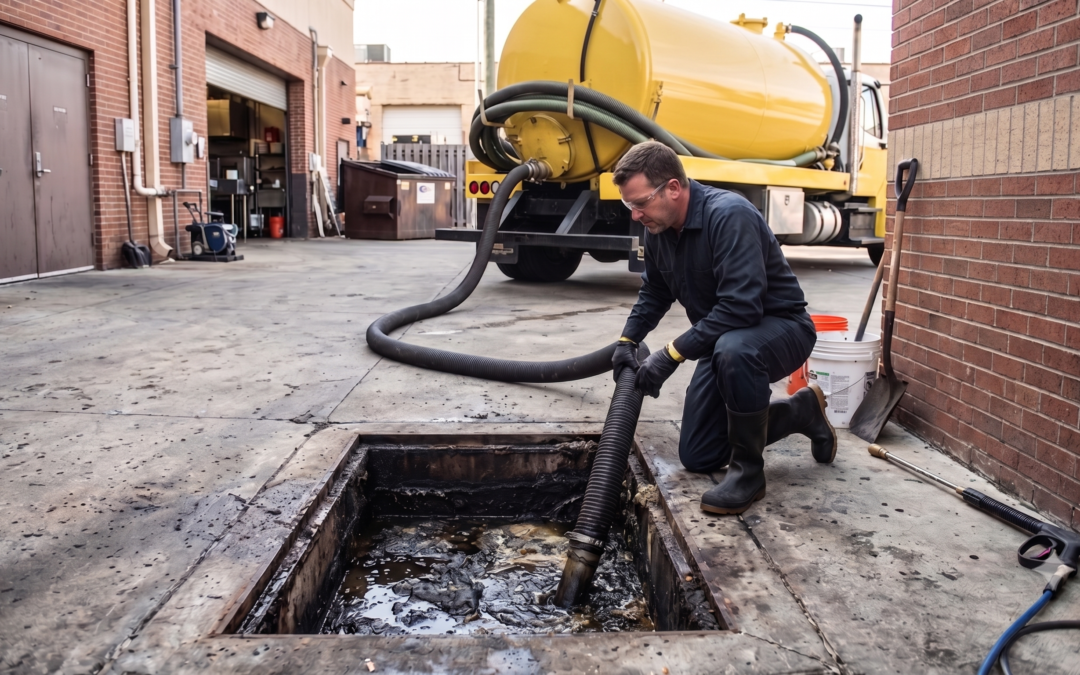
A thorough grease trap cleaning involves pumping out the full contents of the trap, including the floating grease cap at the top and the sludge layer at the bottom. The inlet and outlet baffles are cleared and inspected. The trap interior is scraped and cleaned rather than just pumped. The technician checks the condition of the trap components and provides a service record documenting what was removed and the condition of the system.
A service that only pumps the liquid layer without fully removing the grease cap and sludge is not a complete cleaning. It leaves the biological load inside the trap, shortens the effective service interval, and produces documentation that may not hold up during a wastewater authority inspection. Price differences between providers often reflect differences in service scope, and the cheapest option is not always the one that actually does the full job.
Grease Trap Cleaning Cost: What Michigan Restaurants Typically Pay
Pricing for grease trap cleaning in Michigan varies based on trap size, accumulation level, location, and service frequency. The ranges below reflect typical market pricing for professional service that covers the full cleaning scope.
For small indoor grease traps, which are common in lower-volume restaurants, cafes, and food service operations, routine cleaning typically runs between $150 and $350 per service. These traps are smaller in capacity and generally faster to service when they are maintained on a consistent schedule.
For medium-sized traps serving moderate to high-volume restaurant kitchens, pricing typically falls between $300 and $600 per service. This range covers the majority of full-service restaurant operations with traps that are being serviced on a schedule appropriate to their cooking volume.
For large grease interceptors, which are common in high-volume operations, food processing facilities, and commercial kitchens with significant FOG output, pricing can range from $500 to $1,000 or more depending on capacity and the amount of grease trap waste being removed.
Emergency service, meaning a call outside of regular business hours or a situation where the trap has backed up and requires immediate attention, carries a premium above standard pricing. Depending on the provider and the timing, emergency service can run 1.5 to 2 times the standard rate for the same job.
What Drives Grease Trap Cleaning Costs Up
Several factors push the cost of a grease trap service above the baseline ranges above, and understanding them helps operators anticipate what their specific situation is likely to cost.
Neglected traps cost more to clean. A trap that has gone significantly past its service interval has more accumulated grease trap waste to remove, requires more labor, and in some cases requires additional passes to get the system to a fully clean state. The cost difference between a trap serviced on schedule and one that has been left twice as long as it should have been is often substantial enough to wipe out whatever was saved by delaying the service.
Trap location and accessibility affect labor time. A trap that requires significant effort to access, whether due to location, depth, or surrounding equipment, takes longer to service. That additional labor time is reflected in the price.
High FOG output from the kitchen increases the volume of grease trap waste being removed. Providers who charge based on volume rather than a flat rate will price high-output kitchens accordingly. Understanding how your provider structures pricing is worth clarifying before the service so the invoice is not a surprise.
Disposal costs for grease trap waste are a real component of service pricing. Grease trap waste is a regulated material that requires proper handling and disposal. Providers who quote very low prices sometimes do so by cutting corners on disposal, which creates liability for the business if the waste is not handled in compliance with applicable regulations. A legitimate service includes proper disposal as part of the total cost.
How Often Should a Grease Trap Be Cleaned
How often cleaning grease traps needs to happen is one of the more common questions Michigan restaurant operators have, and the answer depends on cooking volume and trap capacity rather than a single universal rule.
The most reliable benchmark is the 25 percent rule: when the combined depth of the floating grease layer and the bottom sludge reaches 25 percent of the trap’s total liquid depth, the trap needs to be pumped. A qualified service provider can measure this during each visit and use the data to recommend the appropriate interval for the specific trap and kitchen.
As a general guide, high-volume kitchens running multiple shifts or heavy frying operations typically need grease trap cleaning every four to six weeks. Moderate-volume restaurant kitchens usually fall into a monthly to quarterly schedule. Lower-volume operations including cafes and seasonal kitchens may be able to go three to six months between services.
The mistake that leads to the most expensive outcomes is applying a single generic interval across all kitchen types. A high-volume kitchen on a quarterly schedule is almost certainly exceeding the 25 percent threshold well before the service date and paying for it in the form of odor problems, slow drainage, and eventually a backup that costs significantly more to resolve than a properly timed routine cleaning would have.
The Real Cost of Delaying Grease Trap Service
The price of a routine grease trap cleaning is easy to see on an invoice. The cost of delaying service is spread across several categories that are harder to track but add up quickly.
A trap that backs up requires emergency service at premium rates. The backup itself can mean kitchen downtime, potential health department involvement, and revenue loss during the period when the kitchen cannot operate normally. If grease has escaped into the sewer line and caused a blockage downstream, the remediation cost extends beyond the trap itself and can involve municipal wastewater authority fines on top of the service cost.
Repeated delays also shorten the life of the trap and the connected drain infrastructure. Grease that solidifies in pipe runs is harder to remove over time and eventually requires more aggressive intervention than a pump-out would have addressed.
The pattern that consistently produces the highest total cost is reactive service scheduling: waiting until something is wrong to call, then paying emergency rates to fix a situation that a routine service would have prevented for a fraction of the price.
What to Look for in a Grease Trap Cleaning Provider
Price is one factor in choosing a grease trap service provider, but it is not the only one that matters for a Michigan restaurant operation.
A provider that completes the full cleaning scope, including grease cap removal, sludge pumping, baffle inspection, and interior scraping, delivers better value at a higher price point than one that pumps the liquid layer and leaves the rest behind. The difference shows up in how long the trap performs well after the service and whether the documentation holds up during a wastewater authority inspection.
Documentation quality matters as much as service quality for compliance purposes. A service record that clearly shows what was removed, the accumulation level at the time of service, and the condition of the trap components gives operators the information they need to manage the cleaning schedule and demonstrates compliance history when it is requested.
Service reliability and scheduling consistency are worth factoring in alongside price. A provider that shows up on schedule, completes the work thoroughly, and delivers consistent documentation is worth more to a restaurant operation than one that is slightly cheaper but unpredictable.
DPoole Provides Grease Trap Cleaning for Michigan Restaurants
DPoole Commercial Kitchen Cleaning handles grease trap cleaning for restaurants, food service facilities, and commercial kitchens throughout Michigan, including Detroit, Grand Rapids, Lansing, Ann Arbor, Flint, and surrounding communities. Every service includes full grease trap waste removal, baffle inspection, and professional documentation suited for wastewater authority review.
If you are not sure what your kitchen’s cleaning interval should be, or if it has been longer than it should be since the last service, contact DPoole for an assessment and a straightforward quote based on your trap size and cooking volume.
FAQs
How much does grease trap cleaning cost in Michigan?
Pricing varies by trap size and accumulation level. Small indoor traps typically run $150 to $350 per service. Medium traps for moderate to high-volume kitchens generally fall between $300 and $600. Large interceptors for high-volume operations can run $500 to $1,000 or more. Emergency service carries a premium above standard rates.
How often should a grease trap be cleaned in a Michigan restaurant?
Frequency depends on cooking volume and trap capacity. High-volume kitchens typically need service every four to six weeks. Moderate-volume operations usually fall into a monthly to quarterly schedule. Lower-volume kitchens may go three to six months between services. The 25 percent rule, where the trap should be pumped when combined grease and sludge depth reaches 25 percent of total liquid depth, is the most reliable benchmark regardless of kitchen type.
Why does a neglected grease trap cost more to clean?
A trap that has exceeded its service interval has more accumulated grease trap waste to remove, requires more labor, and may need additional passes to reach a fully clean state. The cost difference between a serviced-on-schedule trap and one that has been neglected is often significant enough to exceed the savings from delaying service.
What is included in a proper grease trap cleaning service?
A thorough service includes pumping the full contents of the trap including the grease cap and sludge layer, clearing and inspecting the inlet and outlet baffles, scraping and cleaning the trap interior, and providing documentation of what was removed and the condition of the system.
Is grease trap waste disposal included in the cleaning cost?
It should be. Grease trap waste is a regulated material requiring proper handling and disposal. Providers that quote unusually low prices sometimes exclude or cut corners on disposal. Confirming that disposal is included in the quoted price protects the business from liability associated with improper waste handling.
How do I know if my grease trap is overdue for cleaning?
Slow drains, foul odor near floor drains or in the kitchen, gurgling sounds from drains, and any visible grease backup are common indicators that the trap is overdue. A technician who measures accumulation levels at each service can give a more precise assessment of where the trap stands relative to the 25 percent threshold.