A restaurant can stay on top of its closing checklist every night and still develop cleaning problems that become harder to ignore over time.
Your staff may wipe prep surfaces, clean cooking equipment, sweep and mop floors, and take care of the areas they can reach between shifts. What tends to cause trouble is everything outside that routine. Grease collects behind appliances. Food residue settles into floor edges and grout. Walls near the cooking line become sticky. Exhaust components accumulate grease that cannot be removed by simply wiping the visible hood.
For restaurant owners in Clinton Township, those overlooked areas can eventually affect more than appearance. Heavy buildup can make routine cleaning harder, contribute to odors and slippery surfaces, create additional fire concerns around cooking operations, and leave the kitchen poorly prepared for an unannounced inspection.
The challenge is deciding which work belongs on your employees’ daily checklist and when professional cleaning needs to take over. Understanding what commercial cleaning in Clinton Township, MI should cover, how local restaurant inspections work, and how often different parts of the kitchen may need attention can help you build a cleaning program that works before buildup becomes a larger problem.
Restaurant Cleaning Goes Beyond the Nightly Closing Routine
Your employees remain the first line of defense against dirty food-contact surfaces, spills, food debris, and everyday kitchen messes.
Michigan food-safety guidance requires food-contact surfaces and utensils to be routinely cleaned and sanitized. It also makes an important distinction between those two steps. Cleaning removes food, soil, grease, and other debris, while sanitizing takes place after cleaning to reduce microorganisms on the surface.
That work is part of normal restaurant operations.
Professional restaurant cleaning serves a different purpose. It is most useful for the heavy buildup, difficult access points, equipment areas, floors, walls, and specialty systems that cannot realistically receive the same level of attention during every closing shift.
The two should support each other.
If professional cleaners are expected to compensate for poor daily sanitation, problems will return quickly. If employees are expected to handle every deep-cleaning task themselves while also closing a busy kitchen, difficult jobs are likely to keep getting postponed.
A better system clearly divides routine employee cleaning from scheduled professional work.
What Should Professional Restaurant Cleaning Cover?
There is no single cleaning package that fits every restaurant in Clinton Township.
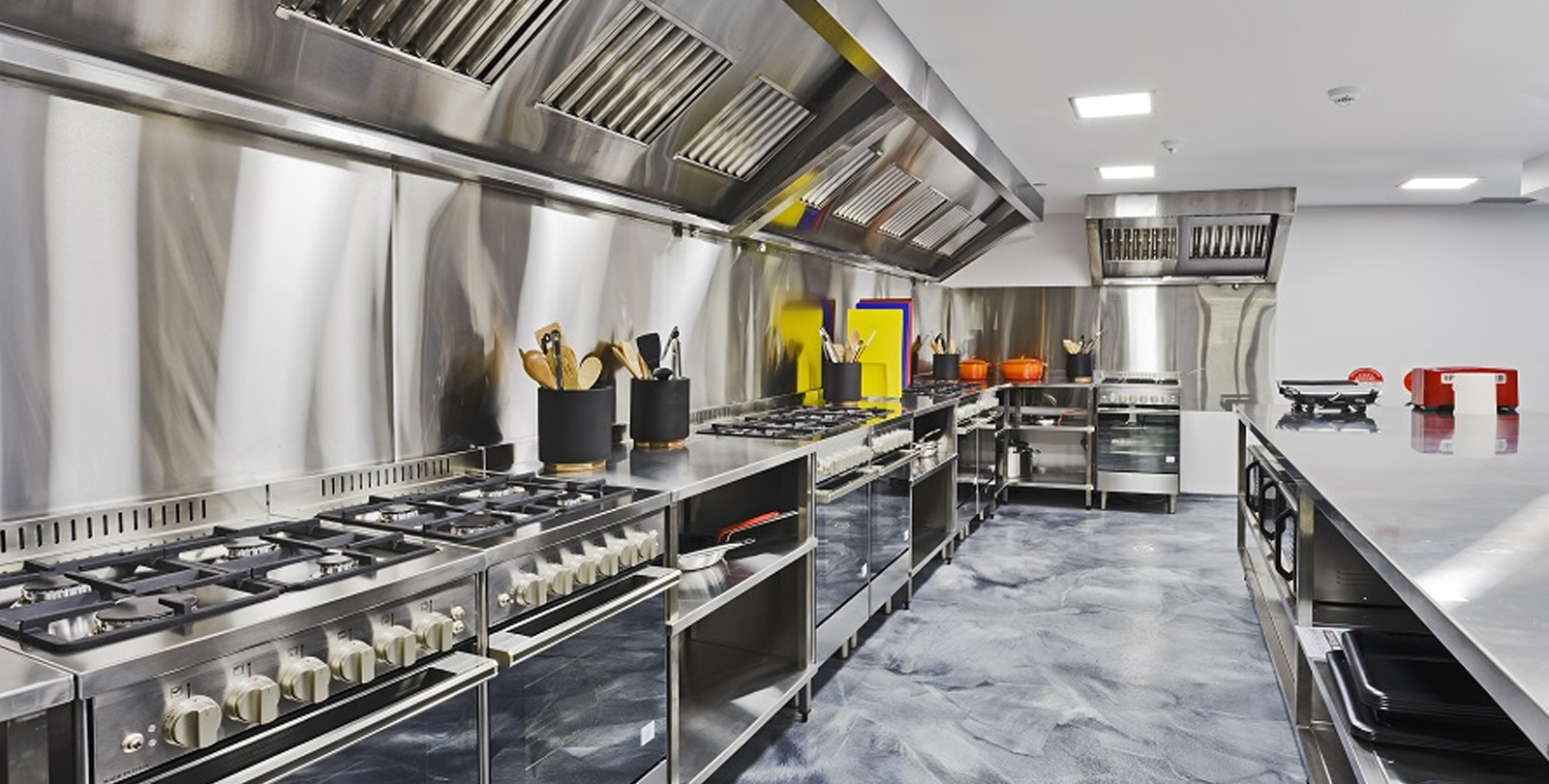
A coffee shop with light food preparation has different needs from a restaurant running fryers, grills, ovens, and charbroilers throughout the day. Before requesting a quote, identify where grease and residue are actually accumulating.
Cooking Equipment and Surrounding Areas
The front of a fryer or range may receive attention every night while the area behind it goes weeks or months without the same level of cleaning.
Depending on the kitchen and agreed service scope, professional cleaning may address:
- Fryers and grills
- Ranges and ovens
- Pizza ovens
- Refrigeration exteriors
- Stainless steel surfaces
- Equipment sides and bases
- Floors beneath movable appliances
- Walls behind the cooking line
- Grease buildup around equipment legs and casters
The areas surrounding equipment are particularly important because grease does not stay on the appliance that produced it.
Heat, steam, splashing oil, food particles, and foot traffic spread residue across nearby surfaces. The longer that material remains in place, the more difficult routine cleaning becomes.
Floors, Walls, Ceilings, and Hard-to-Reach Surfaces
Mopping an open kitchen floor is not the same as deep cleaning it.
Grease and food residue can accumulate in grout, corners, floor edges, beneath equipment, and along wall junctions. Walls near fryers and grills may also develop a film that becomes increasingly noticeable over time.
Ceilings, vents, shelving, lighting areas, and other surfaces may receive even less routine attention.
Michigan’s food code addresses the condition and cleanability of physical facilities, including surfaces and equipment areas. Food-service establishments therefore need more than clean countertops if the rest of the kitchen is developing substantial buildup.
A professional deep clean gives you an opportunity to work through those less-accessible areas systematically instead of waiting until they become obvious.
Hood and Exhaust System Cleaning
Restaurant owners should treat hood and exhaust cleaning as a specialty service rather than assuming it is automatically included in every kitchen-cleaning package.
The visible hood is only one part of the system.
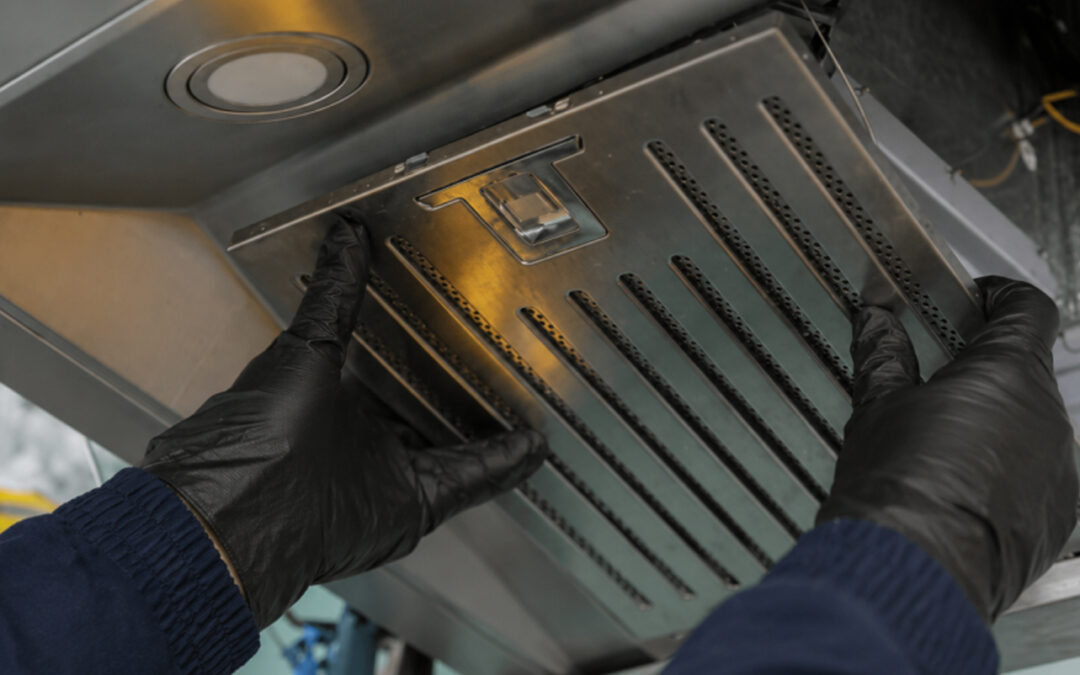
Grease-laden vapors can move into filters, ductwork, exhaust fans, and other components. NFPA 96 addresses inspection and maintenance of commercial cooking ventilation systems, including checking exhaust systems for grease accumulation based on cooking type and volume.
If you are requesting commercial cleaning in Clinton Township, MI, ask specifically whether exhaust cleaning is part of the quote.
Find out whether the service includes:
- Hood surfaces
- Filters or baffles
- Accessible ductwork
- Exhaust fans
- Other grease-contaminated components
Do not assume that a company offering to “clean the hood” is describing the complete exhaust system.
How Local Restaurant Inspections Affect Clinton Township Businesses
Restaurants in Clinton Township fall within Macomb County’s food-service inspection program.
The Macomb County Health Department provides an online system where the public can view recent routine inspections by ZIP code. The county states that licensed food-service facilities generally receive routine, unannounced inspections at least once every six months, or at least once every 12 months for facilities open nine months or less during the year. Follow-up inspections can be conducted when needed.
That makes routine maintenance more useful than trying to guess when an inspector may arrive.
Professional cleaning does not guarantee that your restaurant will pass a health inspection. A cleaning contractor cannot control food temperatures, employee hygiene, food storage, cross-contamination, sanitizer concentrations, or every other requirement your operation must follow.
What professional cleaning can help with is the physical condition of the kitchen.
Grease on floors, residue around equipment, neglected surfaces, and buildup in difficult-to-reach spaces become much easier to manage when they are addressed throughout the year rather than immediately before an inspection.
Your goal should be a kitchen that is consistently maintained, not one that only receives serious attention when an inspection feels imminent.
How Often Should a Restaurant Schedule Deep Cleaning?
The answer depends more on your operation than on the calendar.
A high-volume Clinton Township restaurant operating seven days a week may develop grease considerably faster than a seasonal or lower-volume kitchen. Even within the same restaurant, different cleaning tasks may require different frequencies.
Factors worth considering include:
- Daily food volume
- Hours of operation
- Frying and grilling volume
- Type of cooking equipment
- Grease accumulation
- Staff cleaning responsibilities
- Accessibility behind equipment
- Condition of floors and grout
- Previous cleaning frequency
- Seasonal increases in business
The signs inside your own kitchen can also tell you when the current schedule is falling behind.
Sticky floors that quickly return after mopping, persistent odors, visible buildup behind equipment, darkened grout, greasy walls, or recurring residue in the same locations may indicate that certain tasks need to happen more frequently.
Hood and exhaust-system schedules should be considered separately. NFPA 96 guidance uses the type and volume of cooking when establishing inspection intervals for grease buildup, rather than applying one frequency to every commercial kitchen.
That is why a useful cleaning plan often contains several schedules rather than one universal “deep clean” date.
What Should You Ask a Restaurant Cleaning Company?
Choosing a commercial cleaning company based only on price can make two very different services look identical.
Before approving an estimate, ask the company to explain exactly what the price covers.
Useful questions include:
- Which equipment will be cleaned?
- Are floors beneath equipment included?
- Will walls and hard-to-reach surfaces be addressed?
- Does the company move equipment, or must your staff prepare it?
- Is hood and exhaust cleaning included?
- Are grease trap services separate?
- How should food and supplies be protected before service?
- Can cleaning be performed outside your operating hours?
- What happens if heavier buildup is discovered?
- Is the price agreed upon before additional work begins?
These questions make it much easier to compare companies accurately.
A low estimate may be perfectly reasonable, but it may also exclude equipment areas, exhaust cleaning, difficult-access work, or other tasks you expected to receive.
The scope matters just as much as the final number.
Schedule Cleaning Around the Way Your Restaurant Operates
Professional cleaning should reduce disruption, not create another operational problem.
For most restaurants, deep cleaning is easier when food preparation has stopped and equipment can be safely accessed. That may mean evening, overnight, early-morning, or scheduled closed-day service.
Ask potential cleaners what preparation they need from your staff.
You may need to:
- Remove or protect exposed food
- Clear certain work surfaces
- Empty particular storage areas
- Make equipment accessible
- Coordinate access to locked areas
- Stop using designated equipment before the crew arrives
D Poole Commercial Kitchen Cleaning states that it works around the operating schedules of Michigan commercial kitchens and offers cleaning tailored to the needs of individual facilities. The company also lists Clinton Township and Macomb County among its service areas.
Planning these details ahead of time helps keep the cleaning from interfering unnecessarily with service.
Build a Restaurant Cleaning Plan Before Buildup Takes Over
The most useful restaurant cleaning program is not the one with the longest checklist. It is the one that makes clear who cleans each area, how often it needs attention, and when a job has become too involved for the nightly closing routine.
Your employees should continue handling the routine cleaning and sanitizing required during normal operations. Professional service can then target the deeper grease, equipment areas, floors, walls, exhaust components, and difficult surfaces that need more time, access, or specialized cleaning methods.
For restaurant owners looking for commercial cleaning in Clinton Township, MI, the first step is to walk through the kitchen with a critical eye. Look behind the equipment, along the floor edges, above the cooking line, and anywhere your normal cleaning routine struggles to reach.
D Poole has provided commercial kitchen cleaning services in Michigan since 1979 and serves restaurants in Clinton Township and the wider Macomb County area. A professional evaluation can help you determine which areas need immediate attention and which ones should become part of a recurring cleaning schedule.
Frequently Asked Questions About Commercial Cleaning in Clinton Township, MI
How much does restaurant cleaning cost in Clinton Township, MI?
Pricing depends on the size of the kitchen, amount of grease and residue, number and type of appliances, accessibility, scope of work, and how often service is required. A detailed estimate based on your actual kitchen is more useful than relying on a general per-square-foot figure.
How often are Clinton Township restaurants inspected?
Macomb County states that licensed food-service establishments generally receive routine, unannounced inspections at least once every six months. Facilities operating nine months or less during the year are generally inspected at least once every 12 months. Follow-up inspections may also occur when needed.
Does professional cleaning guarantee that my restaurant will pass an inspection?
No. Professional cleaners can help address grease, dirt, residue, and difficult-to-clean areas, but restaurant inspections cover many issues outside a cleaner’s control, including food handling, temperatures, employee practices, storage, sanitization procedures, and equipment condition.
What is the difference between cleaning and sanitizing a commercial kitchen?
Cleaning removes food, soil, grease, and debris. Sanitizing is performed after cleaning to reduce microorganisms on a clean food-contact surface. Michigan food-safety guidance treats them as separate steps.
Is hood cleaning normally included with restaurant deep cleaning?
Not always. Hood and exhaust cleaning may be quoted separately because it involves different components and procedures. Ask whether your estimate covers only the visible hood or also filters, ducts, fans, and other exhaust-system components.
How often should restaurant hoods and exhaust systems be cleaned?
There is no single cleaning interval for every restaurant. NFPA 96 bases inspection frequency for grease accumulation on factors such as cooking type and volume. The condition of the system and requirements of the applicable authority should determine when cleaning is required.
Can restaurant cleaning be performed after closing?
Yes, many professional commercial kitchen cleaning services can be scheduled outside normal restaurant hours. This can make equipment access easier and reduce interference with food preparation and customers.
What should my employees clean every day?
Daily responsibilities typically include food-contact surfaces, utensils, spills, accessible cooking-equipment surfaces, floors, and other areas required by the restaurant’s sanitation procedures. Exact responsibilities should reflect your operation and applicable food-safety requirements.
What areas are commonly missed during restaurant cleaning?
Areas behind and beneath equipment, floor edges, grout, equipment legs, wall surfaces near cooking appliances, overhead surfaces, shelving, and parts of exhaust systems can be overlooked because they are harder to access than open surfaces.
How do I know when my restaurant needs a professional deep clean?
Repeated grease buildup, sticky floors, persistent odors, residue behind appliances, darkened grout, greasy walls, and areas that employees consistently cannot reach are common signs that your existing cleaning schedule may not be sufficient.
Should restaurant equipment be moved during deep cleaning?
It depends on the equipment. Some movable appliances can be repositioned to provide access, while equipment connected to gas, electrical, plumbing, or ventilation systems may require additional precautions or qualified professionals. Confirm responsibilities with the cleaning company beforehand.
Does D Poole provide commercial cleaning in Clinton Township, MI?
Yes. D Poole specifically lists Clinton Township and Macomb County among its Michigan service areas. Its services focus on commercial kitchens, including restaurant deep cleaning and related kitchen-cleaning needs.