
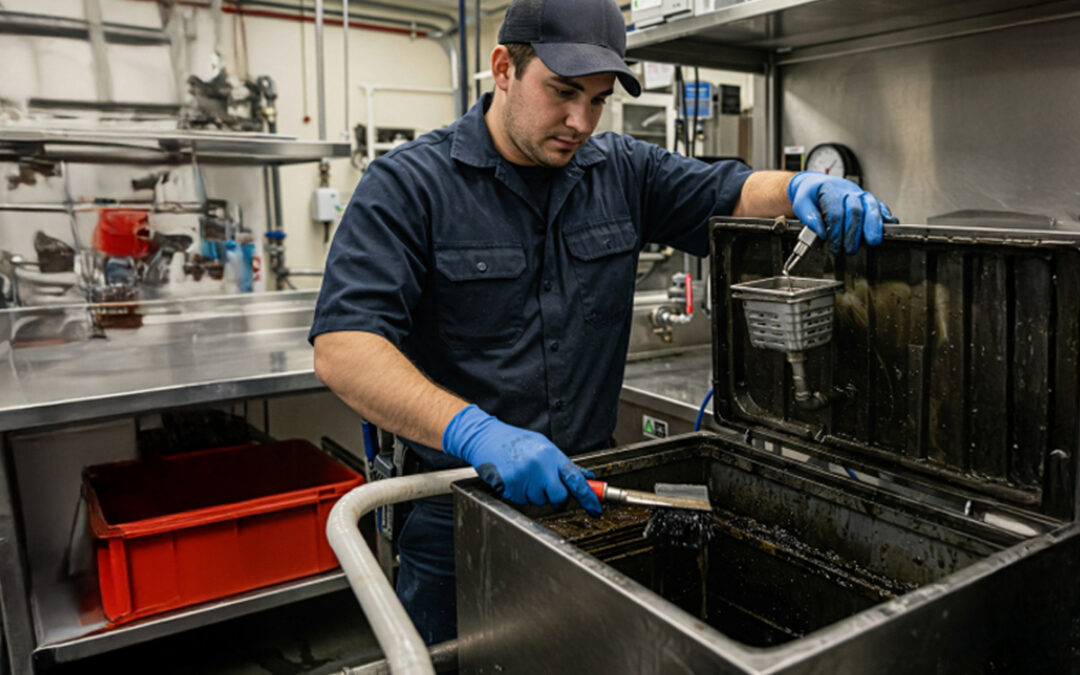
Not every commercial kitchen produces the same amount of grease. A full-service restaurant running breakfast, lunch, and dinner is putting a very different load on its grease trap than a small cafe serving coffee and light pastries. Yet both operators are often given the same generic advice: clean it every three months.
That advice works for some kitchens. For others, it leads to backups, compliance problems, and service calls that could have been avoided. The reality is that grease trap cleaning in Michigan needs to match the actual demands of the kitchen, and those demands vary significantly depending on size, cooking volume, and the type of food being prepared.
This comparison breaks down how cleaning frequency, trap sizing, and maintenance expectations differ between high-volume kitchens and smaller cafe operations, so you can build a schedule that actually fits your kitchen instead of guessing.
The Core Difference: How Much FOG Each Kitchen Produces
FOG, which stands for fats, oils, and grease, is the primary driver of grease trap buildup. The more FOG a kitchen produces, the faster the trap fills, and the sooner it needs to be pumped.
High-volume kitchens generate FOG at a much higher rate because they are cooking more food, using more oil, and running more water through the system throughout the day. A busy restaurant frying proteins, cooking with heavy oils, and running a full dishwashing operation is introducing a constant stream of FOG into the trap across multiple shifts.
A small cafe with a limited menu, minimal frying, and lower customer volume produces a fraction of that load. The trap still accumulates FOG over time, but the rate is slow enough that a less frequent cleaning schedule is often appropriate.
The problem is when operators do not account for this difference. A high-volume kitchen following a quarterly schedule may already be well past the point where the trap is functioning properly. A small cafe paying for monthly service may be spending money it does not need to.
High-Volume Kitchens: What the Cleaning Schedule Usually Looks Like
For busy restaurants, cafeterias, hotel kitchens, and food processing facilities, grease trap buildup happens fast. Depending on trap size and cooking volume, these kitchens often need service every four to six weeks, and in some cases even more frequently.
The benchmark that most service providers use is the 25 percent rule: when the combined depth of the floating grease layer and the bottom sludge reaches 25 percent of the trap’s total liquid depth, the trap needs to be pumped. For a high-volume kitchen, that threshold can be hit well before the 90-day mark that a generic quarterly schedule assumes.
High volume kitchen waste also tends to be more varied and more aggressive. Heavy use of animal fats, frying oils, and proteins breaks down differently inside the trap and can accelerate bacterial growth, which intensifies odor and complicates cleaning if the trap is left too long.
For these kitchens, staying ahead of the schedule is not just a compliance issue. It is an operational one. A backup in a high-volume kitchen during a busy service period is expensive in ways that go well beyond the cost of a cleaning.
Small Cafes: Where Over-Servicing Is a Real Problem
On the other end of the spectrum, small cafes and low-volume food service operations often do not need nearly as frequent service as they are being sold.
A cafe with a menu focused on beverages, baked goods, and light breakfast items produces relatively little FOG. The trap fills slowly, bacterial growth stays manageable, and a cleaning every three to six months may be entirely appropriate depending on the specific setup.
Cafe grease maintenance is still important. A trap that is never serviced will eventually overflow regardless of how slowly it fills. But the risk for most small cafes is not emergency backup. It is paying for service on a schedule that was designed for a kitchen twice their size.
Getting the frequency right for a small cafe means looking at actual buildup rates rather than defaulting to a standard commercial schedule. A good service provider will inspect the trap, measure the accumulation, and give an honest recommendation based on what they find rather than booking the next visit before they leave.
How Trap Sizing Affects Everything
Cleaning frequency is not only about how much FOG the kitchen produces. It is also about how much capacity the trap has to hold it.
Grease trap sizing in Michigan, as in most states, is generally based on the flow rate of the kitchen’s fixtures and the expected volume of wastewater. A properly sized trap for a high-volume kitchen gives the system enough room to separate FOG efficiently even during peak hours. An undersized trap fills faster, loses separation efficiency sooner, and needs more frequent service.
This is a common issue in older buildings where kitchen operations have grown but the original trap has never been replaced or upgraded. A restaurant that started as a small cafe and expanded its menu and volume over time may be running a trap that was never sized for its current output. In those cases, no cleaning schedule will fully compensate for a trap that is simply too small for the load it is handling.
For any Michigan operator who has noticed that their service intervals are getting shorter and shorter, or that odor and drainage issues are appearing sooner after each cleaning, trap sizing is worth evaluating.
The Cleaning Schedule Differences That Actually Matter
Rather than a single rule, a more useful way to think about cleaning schedule differences is to match the schedule to a few specific factors.
Cooking type matters. Kitchens that fry frequently or use heavy animal fats fill their traps faster than kitchens focused on lighter cooking methods. A pizza cafe using moderate cheese and light oils sits in a very different category than a full-service diner running bacon and fried chicken through multiple shifts.
Service hours matter. A kitchen running two or three shifts a day moves significantly more water and waste through the system than one operating four hours in the morning. More operational hours means more FOG entering the trap per week.
Trap capacity matters. A larger trap gives more buffer time between services. A smaller or older trap reaches its limit faster regardless of what the kitchen is doing.
Documented buildup rates matter most. The most reliable way to set a cleaning schedule is to track what the trap actually looks like at each service. A technician who records the percentage of accumulation at every visit gives the operator real data to work from rather than a generic recommendation.
What Both Kitchen Types Have in Common
Despite the differences in frequency and volume, high-volume kitchens and small cafes share the same basic compliance expectations when it comes to grease trap cleaning in Michigan.
Local municipalities and wastewater authorities often set minimum service requirements and expect documentation that cleaning has taken place. Whether you are running a 200-seat restaurant or a neighborhood cafe with ten tables, you are expected to maintain the system, keep records, and be able to show proof of service when it is requested.
The documentation piece is where a lot of operators fall short, not because they are skipping cleanings, but because they are not keeping the records organized and accessible. A grease trap inspection that turns up missing or incomplete service history is a problem even if the trap itself is clean.
Getting the Schedule Right for Your Kitchen
If you are not confident your current cleaning schedule actually matches your kitchen’s output, the starting point is a proper inspection that measures real accumulation rather than just estimating based on kitchen type.
DPoole Commercial Kitchen Cleaning handles grease trap cleaning in Michigan for kitchens of all sizes, from high-volume restaurant and food processing operations to smaller cafes and light-service facilities. We assess actual buildup rates, give honest frequency recommendations, and provide the documentation you need to stay ahead of inspections.
The right schedule is the one that fits your kitchen. Let us help you figure out what that looks like.
FAQs
How often should a high-volume restaurant clean its grease trap in Michigan?
Most high-volume kitchens need service every four to six weeks, though the exact frequency depends on trap size, cooking volume, and the type of food being prepared. The 25 percent rule is the most reliable benchmark.
Do small cafes need grease trap cleaning as often as restaurants?
No. Low-volume operations with lighter menus typically accumulate FOG much more slowly and may only need service every three to six months. The key is measuring actual buildup rather than following a generic schedule.
What is grease trap sizing and why does it matter in Michigan?
Trap sizing refers to the capacity of the grease trap relative to the kitchen’s wastewater flow rate. An undersized trap fills faster, loses efficiency sooner, and requires more frequent cleaning regardless of how well it is maintained.
What happens if a grease trap is cleaned too infrequently?
FOG accumulates past the point where the trap can separate it properly, and grease begins passing into the sewer line. This leads to blockages, potential fines from the local wastewater authority, and more expensive remediation than routine service would have cost.
Does Michigan require documentation of grease trap cleaning?
Local municipalities and wastewater authorities often require proof of service as part of their grease trap compliance expectations. Keeping organized service records is an important part of staying compliant regardless of kitchen size.