Running a commercial kitchen is more than great food and quick service. Behind every plate served is a system that keeps the kitchen safe, compliant, and functional, and one of the most important parts of that system is your exhaust hood.
It’s easy to overlook. The hood works silently, pulling grease, smoke, and steam out of the air so your kitchen stays clean and breathable. But over time, grease builds up in the ducts and filters. If ignored too long, that buildup can turn into a serious fire hazard, affect ventilation, and even violate state fire codes.
The real question most restaurant owners ask is: how often should you schedule hood cleaning in Michigan? The answer depends on how much you cook, what you cook, and how your kitchen operates, but there are clear standards every business should follow. And that’s what this blog is about.
Why Hood Cleaning in Michigan Is Non-Negotiable
Before talking frequency, let’s talk about importance. Hood cleaning in Michigan is not just about having shiny stainless steel. It is about keeping your staff, your customers, and your investment safe.
When grease vapor rises from cooking surfaces, it doesn’t just disappear. It cools, condenses, and sticks inside your hood, filters, ducts, and fans. Over weeks, this layer thickens. Over months, it becomes highly flammable. All it takes is one flare-up under the grill or fryer to ignite the buildup, and suddenly, you have a fire that spreads fast through your exhaust system.
Beyond safety, grease buildup also:
- Reduces airflow, making your kitchen hotter and less comfortable.
- Causes odors that linger even after closing time.
- Makes your exhaust fan work harder, raising energy costs.
- Attracts pests drawn to grease deposits.
- Violates NFPA 96 fire safety codes and local health regulations.
In short, neglecting your hood system is a risk no Michigan restaurant should take.
NFPA 96: The Standard That Sets the Schedule
The National Fire Protection Association (NFPA) created Standard 96, which outlines when and how often commercial kitchens must clean their hoods. Michigan follows these same guidelines.
Here’s the general rule:
| Type of Cooking Operation | Required Hood Cleaning Frequency |
| High-volume cooking (24-hour kitchens, fried foods, fast food) | Every 3 months |
| Moderate-volume kitchens (casual dining, cafeterias) | Every 6 months |
| Low-volume operations (churches, seasonal businesses, senior centers) | Every 12 months |
| Solid fuel cooking (wood, charcoal, coal) | Monthly |
So, if your kitchen runs all day frying chicken, burgers, or doughnuts, you’ll need professional cleaning every three months or sooner. For slower-paced or seasonal kitchens, semiannual or annual cleanings may suffice.
But here’s the catch: these are minimum standards. Real-world conditions can mean you need more frequent cleaning than the chart suggests.
What Factors Affect How Often You Need Hood Cleaning
Every kitchen is different. While NFPA 96 gives a baseline, your cleaning schedule should reflect your kitchen’s specific conditions.
1. Type of Food You Cook
Greasy or fried foods release more vaporized fat than baked or boiled dishes. A pizza kitchen or grill-heavy restaurant needs cleaning more often than a salad bar or coffee shop.
2. Hours of Operation
A kitchen running 10–12 hours daily accumulates buildup faster than one open just for lunch. The longer the hood runs, the more grease it traps.
3. Equipment Used
Fryers, flat tops, and charbroilers create more grease than convection ovens or steamers. The more oil-based cooking surfaces you have, the shorter your cleaning cycle should be.
4. Kitchen Ventilation Setup
Poor ventilation or old systems trap more residue. If your fans or filters aren’t performing efficiently, grease will build up faster.
5. Inspection Results
If your hood or filters look greasy even after a recent cleaning, that’s your sign. Schedule cleanings based on need, not just a calendar reminder.
A good rule of thumb? If you can see or feel grease buildup, you’ve already waited too long.
How to Tell When Your Hood Needs Cleaning
Even if you already follow a cleaning schedule, knowing the warning signs helps you stay ahead of hazards before they turn into costly problems. A properly maintained hood should ventilate efficiently, remain free of grease buildup, and keep your kitchen air clean. If you notice any of the following, it’s time to schedule professional hood cleaning in Michigan.
1. Sticky residue on or above the hood surface
If the metal feels tacky when touched, grease is beginning to accumulate. That residue can spread into corners, vents, and seams, reducing airflow and increasing the risk of ignition during cooking.
2. Visible grease drips on walls or near vents
Drips or dark streaks forming around tiles or vents indicate that the filters and ducts are overloaded. These greasy marks show that vaporized oils are escaping into the open rather than being properly captured and vented out.
3. Strong, lingering cooking smells even after closing time
When odors remain long after service hours, it means the ventilation system is no longer clearing air effectively. Grease buildup inside ducts traps smells, circulates them throughout the kitchen, and signals that suction has weakened.
4. Fan making loud or strained noises
A healthy exhaust fan runs with a steady, quiet hum. If it starts rattling, humming loudly, or sounding strained, grease buildup might be adding weight to the blades or blocking rotation. This strain shortens the fan’s lifespan and lowers ventilation efficiency.
5. Smoke buildup or weak suction while cooking
When smoke lingers longer than usual or heat seems to collect near the cooking area, it means the system is clogged. Grease-coated filters and ducts restrict air passage, causing poor suction and unsafe conditions.
If you notice two or more of these signs, schedule a full system cleaning immediately. Acting early keeps your kitchen safe, efficient, and compliant with Michigan’s fire safety regulations.
What Happens During a Professional Hood Cleaning
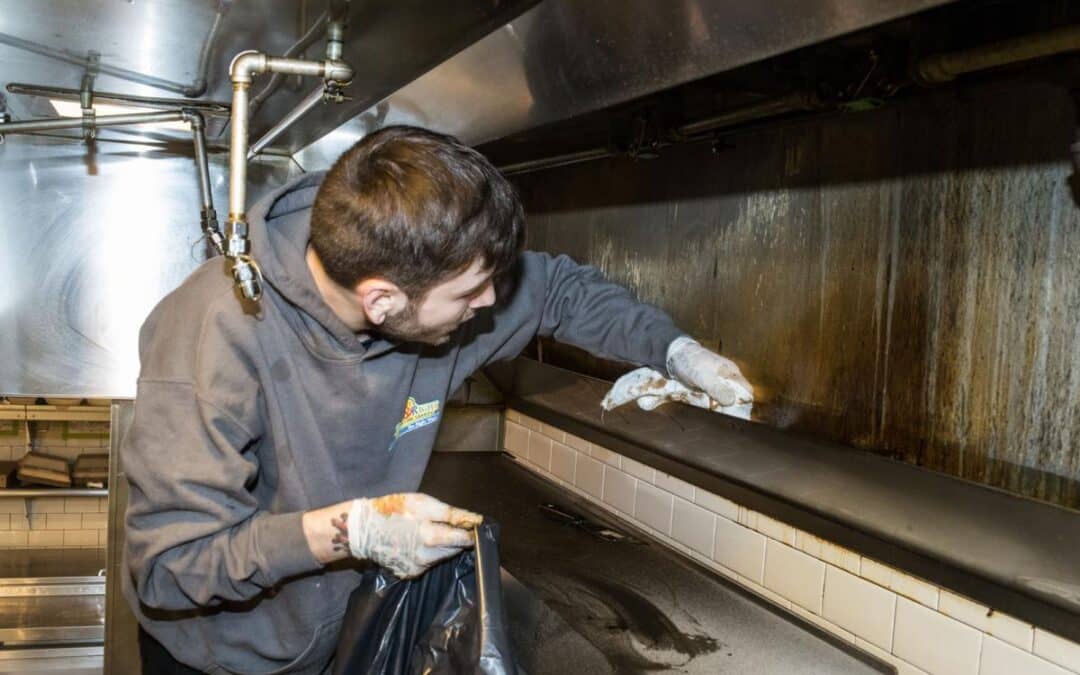
Professional hood cleaning goes far beyond wiping the visible parts. At D Poole Commercial Kitchen Cleaning Services, we follow Michigan fire code and NFPA 96 standards for every job.
Here’s what a proper cleaning includes:
- System Inspection – Checking hood, ducts, and fans for grease buildup, corrosion, and wear.
- Filter Removal and Degreasing – Deep cleaning all removable parts with industrial degreasers.
- Duct and Fan Cleaning – Pressure washing ducts and fans to remove hardened grease deposits.
- Hood Polishing and Reassembly – Cleaning all exterior surfaces and reinstalling every part securely.
- Certification Tag – Placing a cleaning certificate sticker on the hood, documenting the service date for compliance.
This thorough process ensures your system is clean from top to bottom, not just where you can see it.
What Happens If You Skip Hood Cleaning
Ignoring scheduled hood cleaning in Michigan doesn’t just lead to dirty vents. It leads to problems that can shut your business down.
Fire Risk
Grease fires spread faster than you can react. They travel through ducts, ignite insulation, and can cause major property damage.
Code Violations and Fines
Michigan fire inspectors and health departments regularly check compliance. Failing to meet standards can result in fines, failed inspections, or temporary closure.
Higher Maintenance Costs
Grease damages fans, motors, and ducts. Cleaning costs a fraction of what repairs or replacements do.
Insurance Problems
Most insurers require proof of regular hood cleaning. Skipping it can void coverage if a fire occurs.
Poor Air Quality
A dirty hood reduces ventilation, trapping heat, smoke, and odors, making working conditions miserable for your staff.
Simply put, keeping your hood clean is cheaper, safer, and smarter than fixing what neglect causes later.
How to Stay on Schedule (and Stress-Free)
At D Poole Commercial Kitchen Cleaning Services, we know how hard it is to juggle kitchen operations, staffing, and compliance. That’s why we make hood cleaning in Michigan simple and predictable.
Our team provides:
- Customized cleaning schedules based on your cooking volume and inspection needs.
- 24/7 availability for restaurants that can only clean during off-hours.
- Certified technicians trained to meet local and NFPA 96 standards.
- Before-and-after reports for transparency and insurance compliance.
You focus on running your kitchen. We’ll make sure it stays safe, compliant, and spotless.
How Often Should You Schedule Hood Cleaning? The Short Answer
Every kitchen in Michigan operates differently, which means no single cleaning schedule fits all. The frequency of service depends on how often your equipment runs, what type of food you prepare, and how much grease your ventilation system collects over time. Regular hood cleaning is not only about fire prevention—it also keeps your airflow strong and your kitchen comfortable during busy hours.
Here’s a simple guide based on kitchen activity:
- High-volume kitchens: Every 3 months (Think fast-food chains, diners, and 24-hour restaurants where fryers and grills run all day.)
- Moderate-volume kitchens: Every 6 months (Casual dining spots and cafeterias with steady but moderate cooking schedules.)
- Low-volume kitchens: Once a year (Facilities like churches, schools, or seasonal lodges that cook occasionally.)
- Solid-fuel operations: Every month (Wood-fired pizza ovens or charcoal grills that produce heavy smoke and soot buildup.)
If you’re unsure where your kitchen fits, schedule a quick inspection with D Poole Commercial Kitchen Cleaning Services. Our team will evaluate your system, check grease levels, and recommend a cleaning plan that fits your usage, safety needs, and budget.
Stay Fire-Safe, Stay Compliant, Stay Open With Professional Hood Cleaning In Michigan
Skipping hood maintenance is like cooking with a ticking timer you can’t see. You never know when that grease buildup will ignite or when an inspector might show up.
With professional hood cleaning in Michigan from D Poole Commercial Kitchen Cleaning Services, you get more than a cleaning. You get peace of mind.
We help restaurants, hotels, and food service businesses stay compliant, avoid downtime, and operate safely year-round.
✅ Certified, insured professionals
✅ NFPA 96-compliant service
✅ Flexible scheduling for 24/7 kitchens
✅ Affordable plans for all kitchen types
Book your hood cleaning today and keep your kitchen safe, efficient, and ready for every rush.
FAQs About Hood Cleaning in Michigan
1) How often should commercial kitchens in Michigan schedule hood cleaning?
The frequency depends on how busy your kitchen is. High-volume operations like fast-food chains, diners, or 24-hour kitchens need hood cleaning every 3 months. Medium-volume kitchens such as casual dining restaurants or cafeterias should schedule cleaning every 6 months, while low-volume kitchens like seasonal lodges or senior centers can go up to once a year. Solid-fuel cooking operations, like wood-fired pizza ovens, need monthly cleaning due to heavier grease and soot buildup.
2) Why is regular hood cleaning in Michigan so important?
Grease buildup inside your exhaust system is one of the leading causes of kitchen fires. Regular cleaning removes that risk, improves airflow, and keeps your kitchen cooler and safer. It also ensures compliance with Michigan fire codes and NFPA 96 standards, preventing fines or shutdowns during inspections.
3) What happens if I skip a scheduled hood cleaning?
Skipping a scheduled cleaning can lead to thick grease buildup, reduced ventilation, foul odors, and a much higher fire risk. It can also cause your exhaust fan to wear out faster and may result in code violations or voided insurance coverage. A single missed cleaning can easily cost more in repairs and penalties than routine service ever would.
4) How can I tell when my kitchen hood needs cleaning?
You can usually tell by sight and smell. Signs include sticky residue on the hood, yellowing around vents, a smoky smell that lingers after service, or loud fan noise from heavy grease buildup. If your hood surface feels greasy even after wiping, or the airflow feels weak, it’s time for a professional cleaning.
5) What is included in a professional hood cleaning service?
A complete hood cleaning covers more than the visible surface. Professionals remove filters, degrease the entire hood interior, pressure-wash ducts and fans, and polish the exterior. At D Poole Commercial Kitchen Cleaning Services, we finish with a full inspection and certification tag, proving your system meets Michigan’s fire safety standards.
6) Is hood cleaning in Michigan required by law?
Yes. Both the NFPA 96 Fire Code and local Michigan health and fire departments require regular hood and exhaust system cleaning for all commercial kitchens. Restaurants must be able to show proof of service and certification if requested by inspectors. Failure to comply can result in fines or forced closures.
7) Can I clean my own commercial hood system?
You can clean the filters and visible surfaces daily, but the internal ductwork and fan areas should only be handled by certified professionals. DIY cleaning misses hidden grease in ducts and fans, which is where fires start. Hiring a professional ensures the entire system is cleaned safely and documented for compliance.
8) Does D Poole offer after-hours or weekend hood cleaning?
Yes. We know most kitchens can’t shut down during business hours, so D Poole offers after-hours, overnight, and weekend cleaning appointments. This minimizes disruption, ensures your kitchen reopens spotless the next morning, and keeps your schedule running smoothly.
9) How long does a professional hood cleaning take?
The average job takes between 2 to 4 hours, depending on the size of your system and the level of buildup. Large commercial kitchens or systems that have been neglected for months may take longer. Our team always performs a pre-inspection so you know the estimated time before work begins.
10) How can I stay compliant with Michigan’s hood cleaning standards?
The best way is to schedule routine service with a certified provider like D Poole Commercial Kitchen Cleaning Services. We track your cleaning schedule, follow NFPA 96 guidelines, and provide documentation after every visit. You’ll always have proof of compliance ready for inspectors, insurers, and fire marshals.